The prototype
Distributed security risk
Company data in personal chat histories. API keys pasted into prompts. Twenty experiments nobody can audit or switch off, and everyone busy.
- No database
- No login
- No review
- No owner
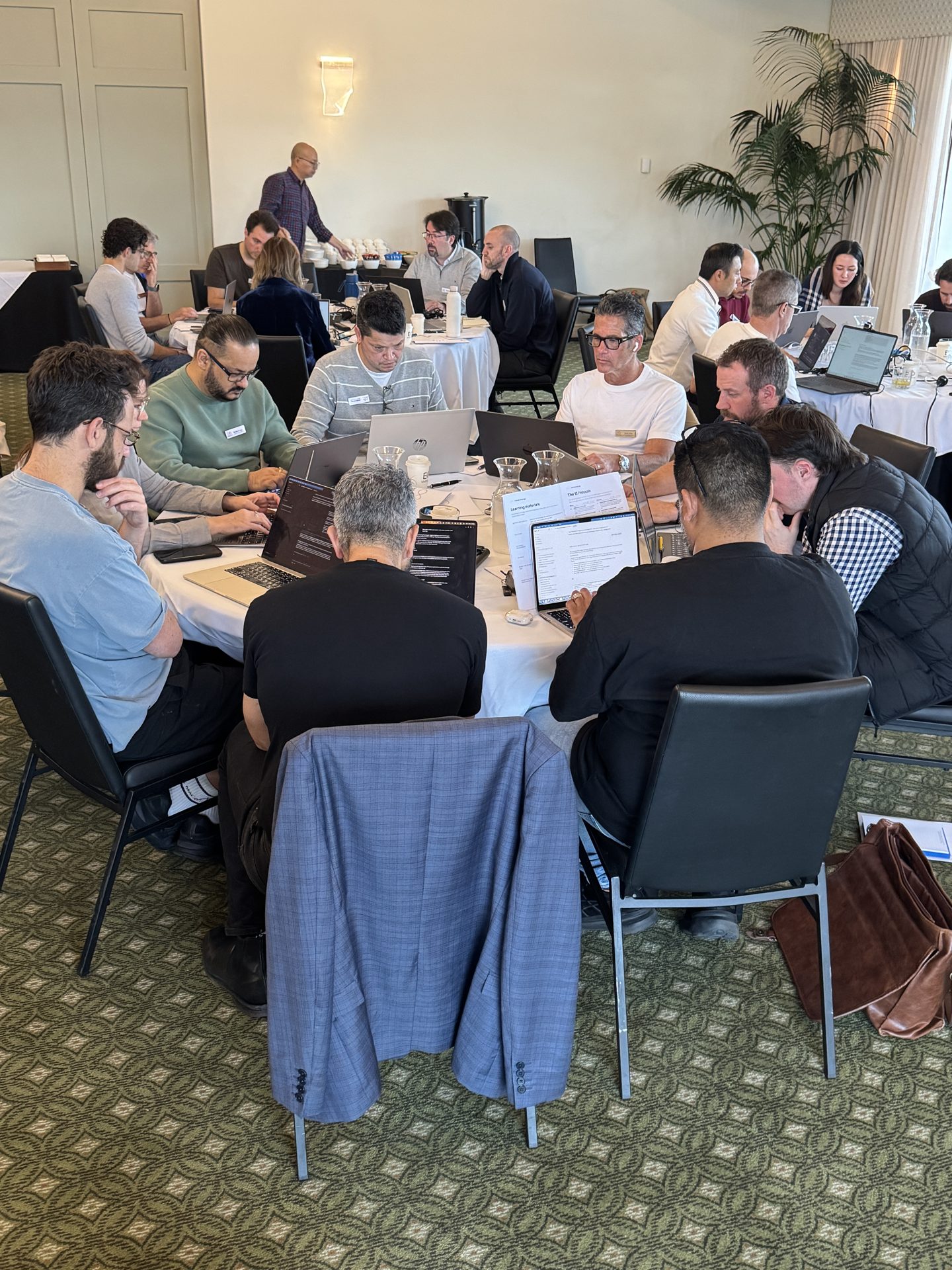
Your people at the tables, our engineers beside them, your data on the screen. Live before the room closes.
Every company now has twenty of them. The difference between a prototype and an AI system is the difference between a security incident waiting to happen and an asset the business runs on.
Company data in personal chat histories. API keys pasted into prompts. Twenty experiments nobody can audit or switch off, and everyone busy.
One central database the company owns. The pieces security asks for, in place from the first commit, so the next feature is a pull request and not a new risk.
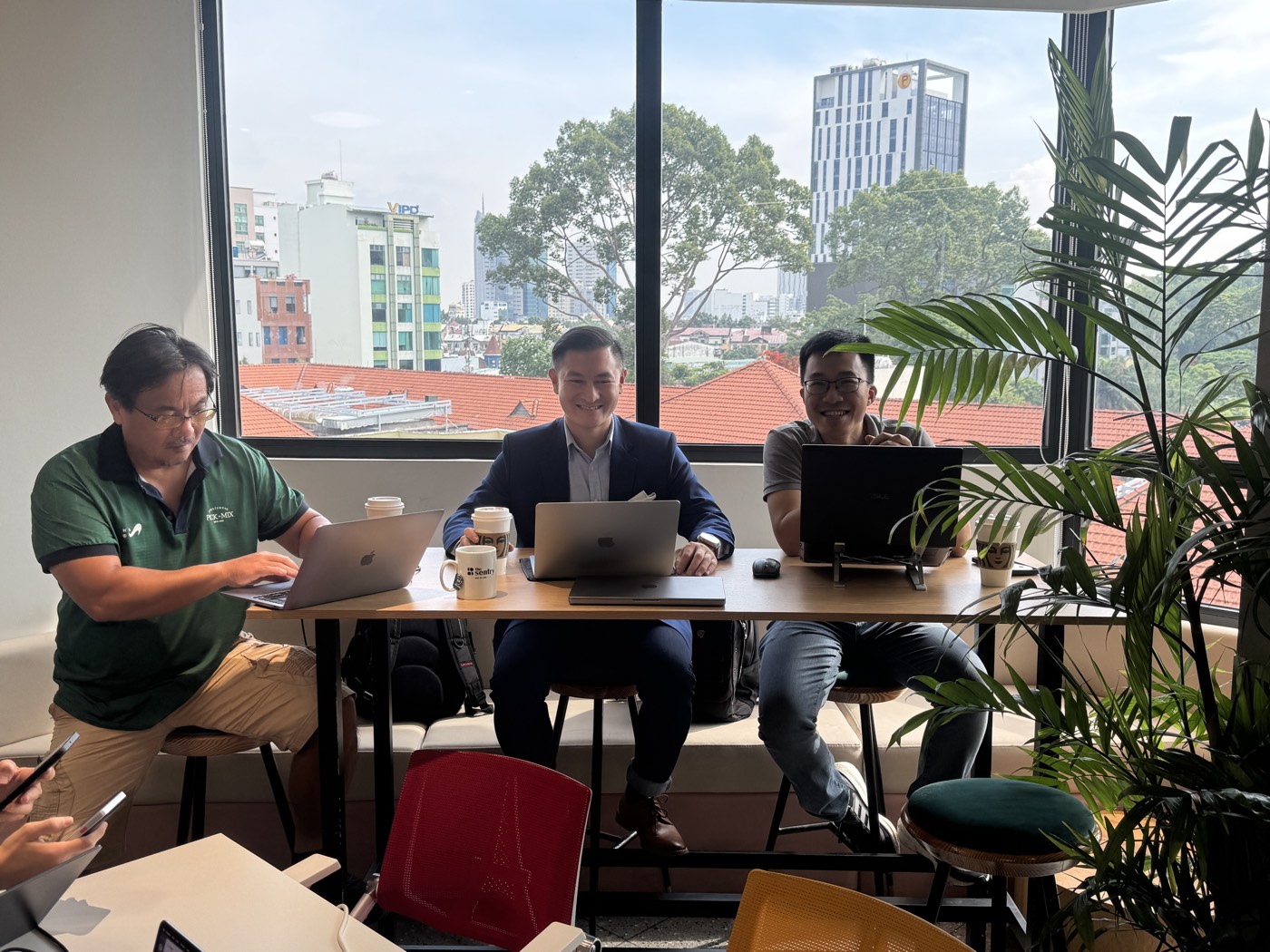
Your team, on your dataYour office, anywhereOne to two days on siteQuoted per engagement
Thirty to ninety membersYour venueHalf a day to two daysQuoted per chapter
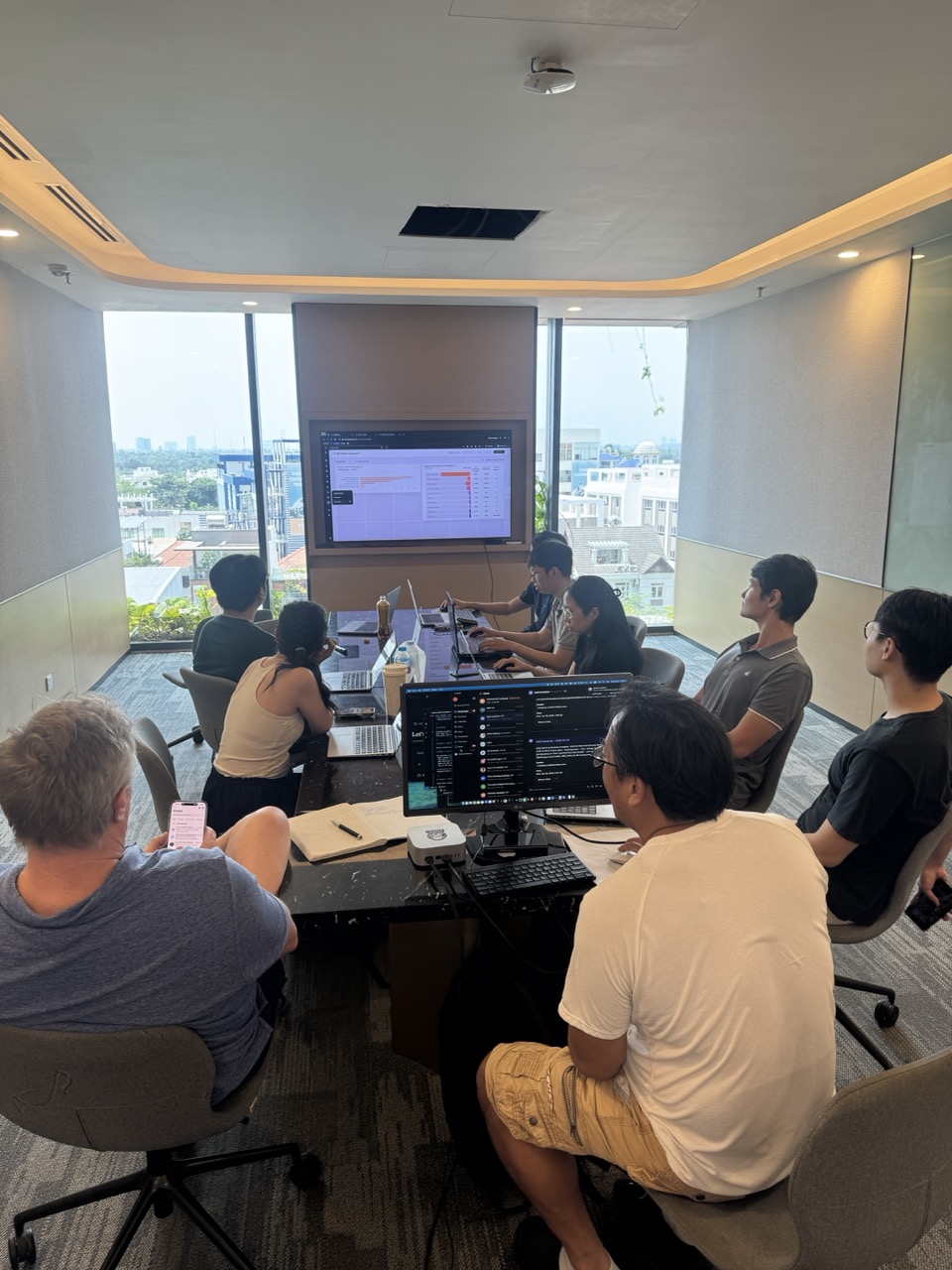
One founder or a team of sixThao Dien, SaigonThree to five days, engineers all dayFrom $7,000
Laptops stay closed for the first hour. Then one prompt per block, engineers at the tables, and a system that is live by the end of the day.
An interview with Claude writes the plan for your system, on your data, before any tool comes out. The plan is the prompt.
The repository, the project and the database, then a login, a live form and one admin page. Deployed, on your domain, by lunch.
The whole system from the morning plan, in your brand, on a branch, merged through a pull request. Real records in, a dashboard on top.
A QA plan and a senior code review, then every owner opens the live system on their own phone. Four agents stay on the repository: product manager, developer, QA, devops.
Most operators confuse working harder with building leverage. These retreats are what I wish someone had handed me earlier.
Corporate and chapter retreats are quoted per engagement, in writing, after a thirty minute call: the number of days, the size of the team and how many engineers it takes set the price. A Saigon private retreat is priced on the page, from $7,000 for three days for the first person. There is no course fee, no per seat licence and nothing to subscribe to afterwards.
In a database your company owns, on your own Supabase project, reached only from the server. Keys sit in environment variables, never in a prompt or a chat history. The admin is behind a login and every change goes through a reviewed pull request on your GitHub. We hold nothing of yours when the retreat ends.
The people who own the problem: the founder or GM, the operator who runs the process today, and whoever will keep building afterwards. Nobody needs to be technical. Engineers are at the tables; your team brings the business knowledge and the data.
Each builder brings a laptop with Claude, GitHub, Vercel and Supabase accounts created and the stack set up from our one page guide. It takes about an hour and we check it on a call the week before, so the first morning is spent planning, not installing.
The system is live and the four agents are on your repository, so the team keeps shipping on Monday. If you want senior engineers on tap for the first thirty days, human tokens cover that: one unit of skilled attention, metered like Claude tokens, no retainer.
Corporate and chapter dates can move once at no charge with thirty days notice. Saigon private retreats refund in full up to thirty days before the start date and reschedule within six months inside that window.